
Like thousands of people all over the UK, I was very disappointed to miss the ‘Tutankhamun: Treasures of the Golden Pharaoh’ exhibition at the Saatchi Gallery due to the pandemic. Egyptology has fascinated me since childhood when I read about the mysterious ‘Curse of the Pharaohs’.
For anyone who is unfamiliar with the tale, English archaeologist Howard Carter made arguably the greatest antiquarian discovery of all time on the 26th November 1922. After scouring the Valley of the Kings in southern Egypt for two decades, the intrepid scholar had finally managed to locate the tomb of Tutankhamun which had lain concealed beneath the rolling desert sands for over three millennia. Spectacular hieroglyphics, priceless artefacts and the majestic golden sarcophagus of the boy king greeted Carter and his team as they prized open the solid stone gateway to the antechamber.
But the euphoria from the discovery would be short lived. Many people associated with the archaeological feat began to die in mysterious circumstances; most notably Lord Carnarvon who had financed the enterprise. It was believed that he had contracted an unknown disease at the tomb, and at the moment of his death all of the lights in Cairo inexplicably went out and his favourite dog had a seizure and died!
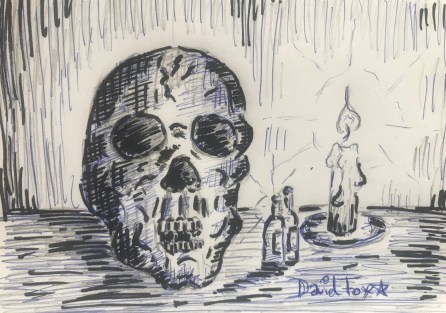
Local people spoke openly of a curse which the ancient Egyptian priests had placed upon the tomb to prevent grave robbers desecrating the final resting place of the Pharaoh. The famous writer Sir Arthur Conan Doyle – who was a believer in spiritualism – insisted that Carter and his men had angered ‘elementals’ or spirits who had been summoned to guard over the antechamber during the funerary rights of Tutankhamun.
The story had echoes of the notorious ‘Unlucky Mummy’ which was found in Thebes and acquired by the British Museum in 1889. Most people who came into contact with the mummy would either die mysteriously or be met with severe ill luck. The original owner lost his fortune and passed away suddenly along with the men involved with transporting the artefact to London. Some said that the ‘Unlucky Mummy’ even found its way onboard the Titanic and the curse was responsible for the disaster! But this theory was quickly debunked as it still resides in room 62 of the British Museum: serial number EA 22542.
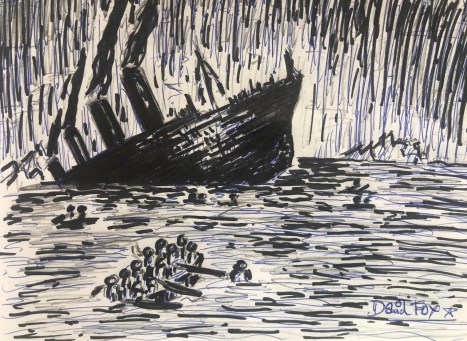
Indeed, the far-fetched tale of the ‘Unlucky Mummy’ perhaps reveals how the notion of a ‘curse’ or some sort of supernatural occurrence can quickly be distorted and exaggerated. Is it indeed possible to ‘curse’ or ‘hex’ someone? Or perhaps the process is somewhat psychosomatic? That is to say, if someone ‘believes’ himself or herself to be cursed, then they will start to ‘invite’ misfortune into their lives?
The debate about the efficacy of curses is interesting, but one thing is certain, Howard Carter’s incredible find, along with the mystery and majesty of ancient Egypt, will continue to capture the popular imagination.
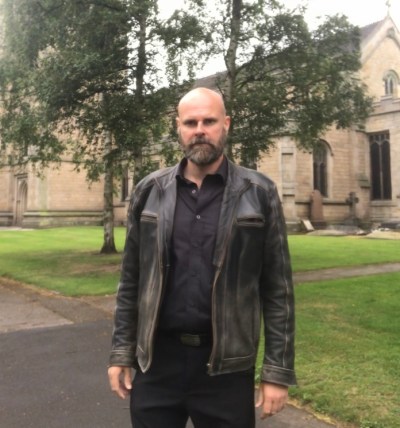
David Fox is a professional entertainer and freelance writer based in the UK. Visit his website for more details: www.magician-midlands.co.uk
 David Fox Magic